September 21, 2026
How Much Does a Dormer Addition Cost in New Jersey?
5 min read time
Topics
Most cost guides for dormers quote a national average somewhere between $12,000 and $40,000. That number is close to useless if you live in Essex County, because it does not account for what you actually pay here: North Jersey labor rates, township permit fees, and the structural work older Capes usually need before a dormer can go on at all.
This guide breaks the cost down by dormer type, then covers the things that move the number up or down in New Jersey specifically. If you are still deciding whether a dormer is right for your house, start with our overview of dormer additions in New Jersey.
Dormer addition cost by type in New Jersey
The first row is our own starting price. The rest are published figures, from New Jersey contractors where they publish by project, and from Long Island, the closest comparable market, where contractors break costs down by dormer type. Sources are listed at the end of this guide.
| Project | What it includes | Cost range | Source |
|---|---|---|---|
| Shed dormer, weather-tight shell | Framing, roofing, siding and windows for a rear shed dormer. Interior not included. | Starting at $25,000 | Breathe Easy Remodeling |
| Attic finished as a bedroom or office | Legal bedroom or year-round office with insulation, electrical and heating or cooling | $30,000 to $55,000 | New Jersey, published |
| Primary suite with bathroom and dormers | Full upper-floor suite with a bathroom and raised ceilings | $60,000 to $100,000+ | New Jersey, published |
| Gable dormer, finished | Single peaked dormer | $35,000 to $65,000 | Long Island, NY |
| Shed dormer, finished | Rear shed dormer with finished interior | $40,000 to $75,000 | Long Island, NY |
| Hip dormer, finished | Hipped-roof dormer | $50,000 to $90,000 | Long Island, NY |
| Full Cape Cod conversion | Full-width rear shed dormer creating a new second floor | $80,000 to $150,000 | Long Island, NY |
What Essex County estimates look like
Town-level estimates for dormer additions in Essex County cover a very wide spread: starting at $25,000 and running up to about $127,000 in Montclair, $114,000 in West Orange, and $115,000 in Livingston, averaging around $115 per square foot.
That spread is the reason a single average is not much use. The low end is one small dormer on a simple roof. The high end is a full conversion with a bathroom. Which type you need matters far more than which town you live in.
For a national reference point, This Old House puts the average at about $24,000, with most homeowners paying $18,750 to $40,000.
Why dormer costs run higher in North Jersey
Four things push Essex County pricing above the national figures.
Labor rates. North Jersey and the NYC commuter belt carry higher trade rates than the national average. Framing, roofing, and finish carpentry all price accordingly.
Older housing stock. Most houses in Montclair, Maplewood, South Orange and West Orange were built between 1900 and 1955. Opening a roof on a house that age regularly turns up undersized rafters, knob-and-tube wiring, or a ceiling joist system never designed to carry a finished floor above. That work has to happen before the dormer goes on.
Township permitting. Every municipality runs its own zoning review, and several Essex County towns have historic districts with separate design review. That adds drawings, time, and fees.
Winter. A roof cannot stay open through a North Jersey winter. Projects are sequenced around weather, and the weather-tight stage is not something to rush.
What actually moves the price
Width. The single biggest driver. A dormer twice as wide is close to twice the framing, roofing, siding, and interior finish.
Whether the interior is finished. A weather-tight shell costs meaningfully less than a finished bedroom with insulation, drywall, flooring, trim, and electrical. Some homeowners split this across two budgets.
Plumbing. Adding a bathroom in the dormer means running supply and waste up through the house. This is often the difference between a straightforward project and a complicated one.
Structural reinforcement. If the existing floor framing cannot carry a finished upper floor, it has to be reinforced first. Common in pre-war houses and usually not visible until the work starts.
Roof pitch. A steeper roof gives more usable height for the same dormer. A shallow pitch means a bigger, more expensive dormer to get the same headroom.
A proper staircase. If the attic is reached by a pull-down ladder, a permanent staircase is needed for a legal bedroom. New Jersey contractors quote about $4,000 to $10,000 or more for that alone, because it usually means cutting through the floor below.
Existing roof age. If the roof is near the end of its life, doing the whole roof at the same time costs less than doing it twice.
The Cape Cod conversion, the most common Essex County dormer project
Essex County has a lot of 1940s and 1950s Capes. They share the same problem: a good first floor and an attic with headroom only down the center line.
A full-width rear shed dormer is the standard fix. It typically produces two bedrooms and a full bathroom, or one large primary suite, on a floor that was previously storage.
Published figures for a full Cape conversion in comparable metro markets run about $80,000 to $150,000. New Jersey attic conversions that add a primary suite with a bathroom and dormers are quoted at $60,000 to $100,000 and up. Where a Cape lands in that range comes down to three things: how wide the dormer is, whether a bathroom goes in, and whether the existing floor framing needs reinforcing.
Permits and what they add to the cost
A dormer needs a construction permit under the New Jersey Uniform Construction Code, plus zoning review, because it changes the roof structure and the building envelope.
Budget for:
- Architectural drawings, and structural calculations where load paths change
- Township construction permit fees, which are based on project value
- Zoning review, and design review if the property sits in a historic district
- Inspections at framing, insulation, and final
Construction permit fees are set by each township and scale with the estimated cost of the work. As a reference point, New Jersey's state fee schedule charges $15 for every $1,000 of estimated cost on the first $50,000 of alteration work. On a $50,000 dormer that comes to about $750 in building fees at the state rate, before the electrical and plumbing permits.
Architectural and structural drawings are a separate cost that depends on the design, so we include them in your estimate rather than quoting a flat figure here. Our New Jersey permit and timeline guide walks through how the permit process runs step by step.
Is a dormer cheaper than a second-story addition?
Usually, yes, and often by a wide margin.
A dormer works within the existing roof and foundation. A full second story means removing the roof entirely, reinforcing or replacing the structure below, and rebuilding from the top plate up.
A dormer is the better choice when you need one or two more rooms and the attic already has partial height. A second story makes more sense when you need to double the floor plan or the existing attic is too shallow to work with. Our guide to types of home additions in New Jersey compares the options across a whole house.
How long does a dormer addition take?
We quote dormer schedules in working days rather than calendar weeks, because the timeline moves with the township inspections. Plan on two stages.
Design and permits. Drawings first, then township plan review. In New Jersey that review runs about 10 to 15 working days in some municipalities and 20 to 30 in others, and it is slower in the spring and summer.
Construction. Framing a shed dormer and getting it weather-tight usually takes 10 to 15 working days. Finishing the interior adds more, especially with a bathroom. Larger additions in New Jersey typically run about 40 to 80 working days from permit approval to certificate of occupancy.
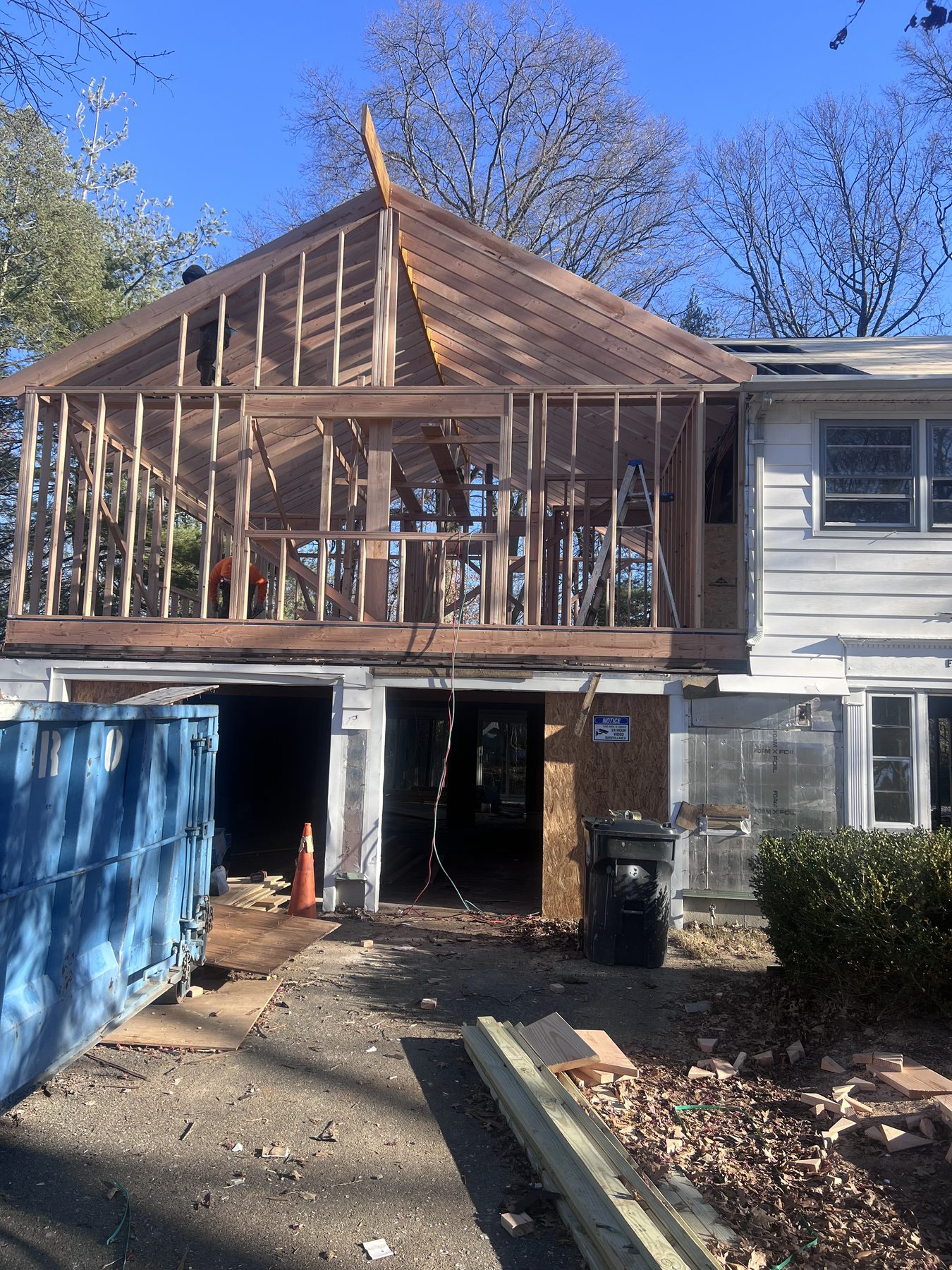
A walkthrough of one of our upper-floor builds in Essex County, at the framing stage.
Dormer addition cost FAQs
How much does a shed dormer cost in New Jersey?
Our shed dormers start at $25,000 for a weather-tight shell, which covers framing, roofing, siding and windows but not the interior. A finished shed dormer runs about $40,000 to $75,000 in comparable markets, and a full-width rear shed dormer that turns a Cape into a two-bedroom second floor typically costs $80,000 to $150,000. Width, plumbing, and whether the floor below needs reinforcing are what move it within that range.
Is a dormer addition worth the money?
It adds finished, heated square footage, which is what an appraiser counts and what a listing advertises. Turning an unusable attic into a legal bedroom and bathroom changes how the house is marketed. Whether it returns the full cost depends on the local market and the finish level.
Do I need a permit to add a dormer in New Jersey?
Yes. A dormer alters the roof structure, so it requires a construction permit under the New Jersey Uniform Construction Code and goes through township zoning review. Requirements vary between municipalities.
Can I add a dormer to any roof?
No. It depends on roof pitch, existing attic headroom, and whether the structure below can carry a finished floor. Shallow-pitched roofs are the usual limitation.
Does a dormer require a new roof?
Not necessarily, but new roofing goes on the dormer itself and it has to tie into the existing roof. If the current roof is near end of life, doing both together costs less than doing them separately.
Will a dormer make the upper floor a legal bedroom?
It can, provided ceiling height, egress window, and smoke alarm requirements are met. Those are code requirements, not design choices, and they are part of what the inspection checks.
Want a real number for your house?
National ranges only get you so far. We will look at your roof, your attic, and what is underneath, and give you an actual figure. Request a free estimate or call +1 973-640-0653.
Sources
- New Jersey attic conversion costs and staircase costs: Jazz Construction Group
- Cost by dormer type and Cape conversions, Long Island: Long Island Homeworks
- Montclair, West Orange and Livingston estimates: Homeyou
- National average: This Old House
- State permit fee schedule: N.J.A.C. 5:23-4.20
- New Jersey plan review and addition timelines: Abrax Constructions
- Shed dormer construction time: Cascella and Sons
Start Your Remodel with Confidence Today
From first conversation to final walkthrough, we keep the process simple, transparent, and on track. No surprises, no runaround — just honest work and clear communication.